Knowledge base

The rules of the Riftbound TCG and every mechanic - explained step by step, illustrated with real cards. A perfect start for beginners and a reference for veterans.

Riftbound rules - the basics

Riftbound is a strategic card game built on gaining and holding control of battlefields. Before we get to the keyword mechanics, here are the six pillars every game is built on - from domains (the colors and attributes of the game) and energy to runes and showdowns.

Rule

The Six Domains (colors)

Fury · Calm · Mind · Body · Chaos · Order

Every card in Riftbound belongs to one of six domains: Fury, Calm, Mind, Body, Chaos and Order. Domains define a deck's identity and dictate which runes you need to play a card. Cards can be single- or multi-domain, and choosing your domains is the first big deckbuilding decision.

Learning how to play Riftbound starts with domains. They decide which cards can share a deck, because every game opens with your choice of legend, and that legend sets the colors you may use. Single-domain decks play more consistently and pay their costs more easily, while two-domain decks offer a wider range of effects at the price of a shakier rune base. The quickest way to test either option is our deck builder, which shows which cards are legal for your legend as you build.

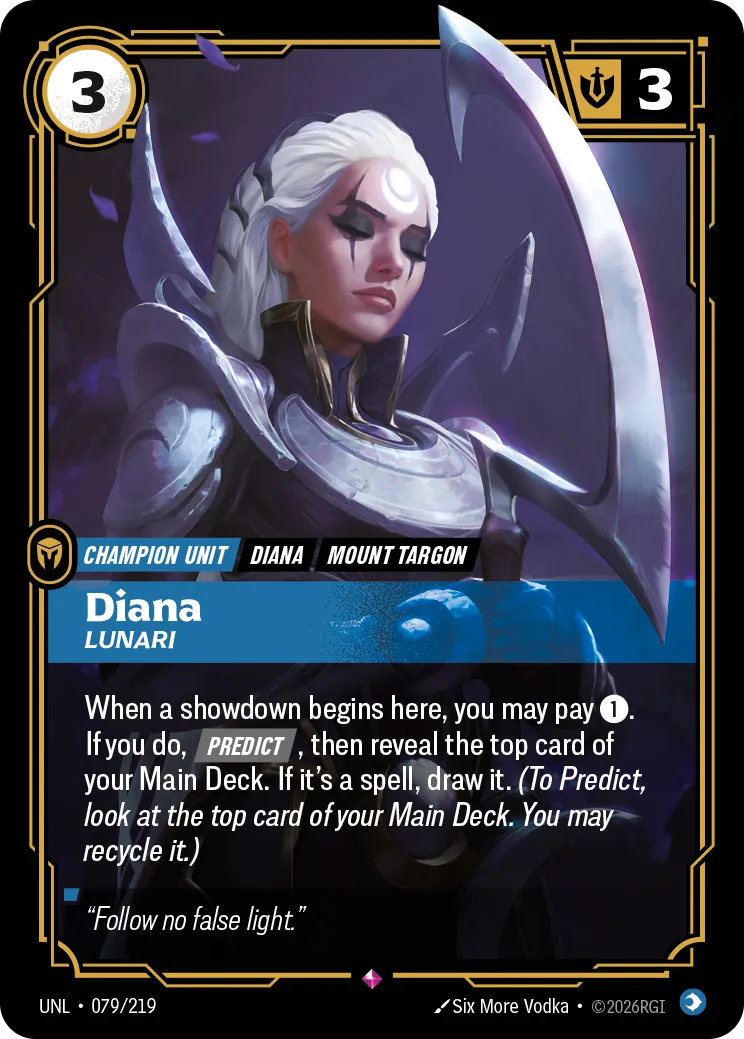
See the card “Diana - Lunari”
Rule

Runes and Energy

Runes power your cards and pay colored costs.

Runes are your colored resource — they produce energy and satisfy the domain requirements printed on cards. You spend energy (⚡) to play cards and exhaust runes to pay their colored costs. Managing your runes and energy each turn is the heart of Riftbound's tempo.

In practice your rune base is the engine of the deck: without the right colors, your strongest cards stay stuck in hand. When you build, you balance how many runes sit in each domain against your energy curve, so you always have something to pay with. The more colors you combine, the more carefully the runes have to be planned, because a single missing color can lock a whole play.

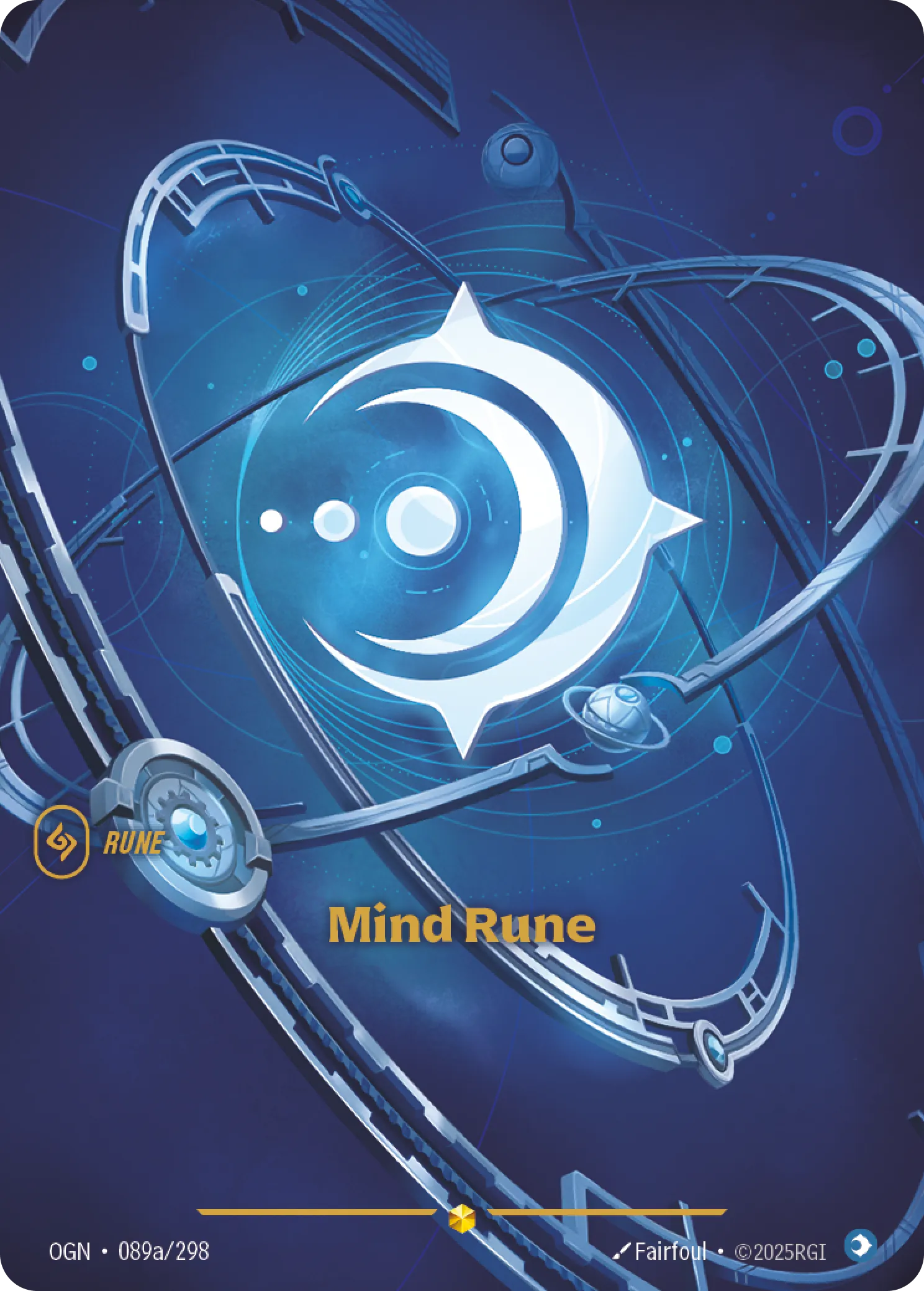
See the card “Mind Rune”
Rule

Card types

Legend · Unit · Champion · Spell · Gear · Rune · Battlefield

A deck is built from several card types: your Legend (your hero and deck identity), Units and Champions (fighters on the battlefields), Spells (instant effects), Gear/Equipment (items attached to units), Runes, and Battlefields. Each type plays a distinct role and together they form your game plan.

Each card type plays a different role, and a good deck mixes them in deliberate proportions: a single Legend sets the identity, units and champions fight over battlefields, spells and gear generate advantage, and separate runes and battlefields form the backbone of the game. Knowing how much of each to run, and when to play it, is the heart of deckbuilding. Our deck builder tracks those proportions and copy limits for you.

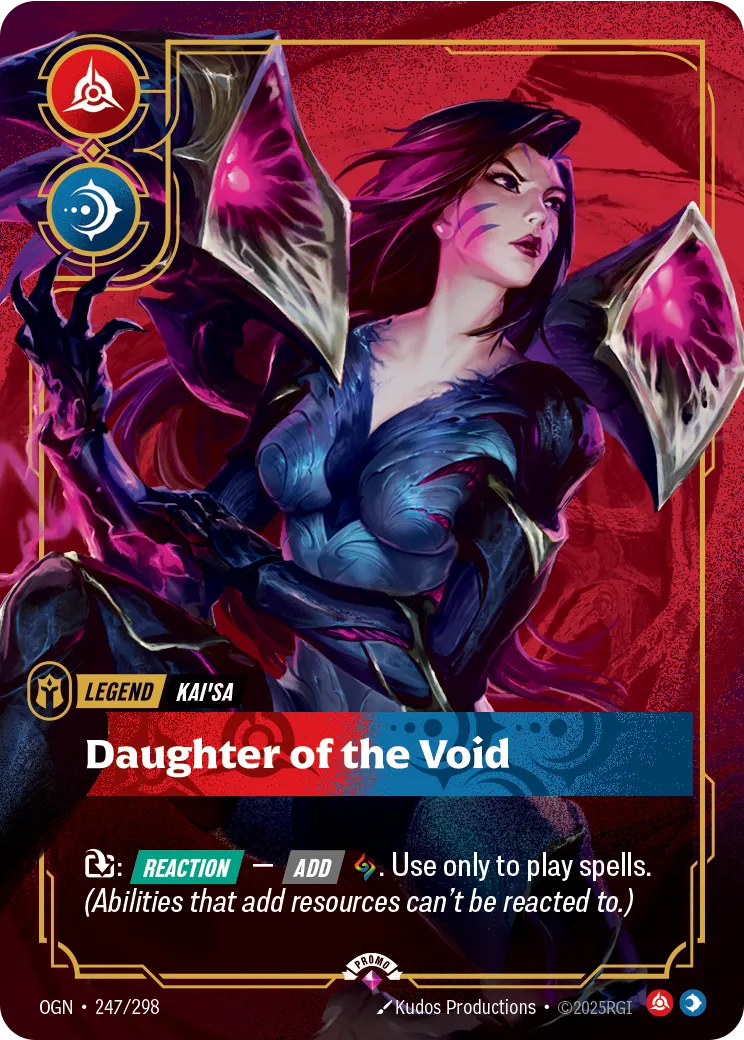
See the card “Kai'Sa - Daughter of the Void”
Rule

Might and recycling (Power)

Might wins fights; recycle refuels your runes.

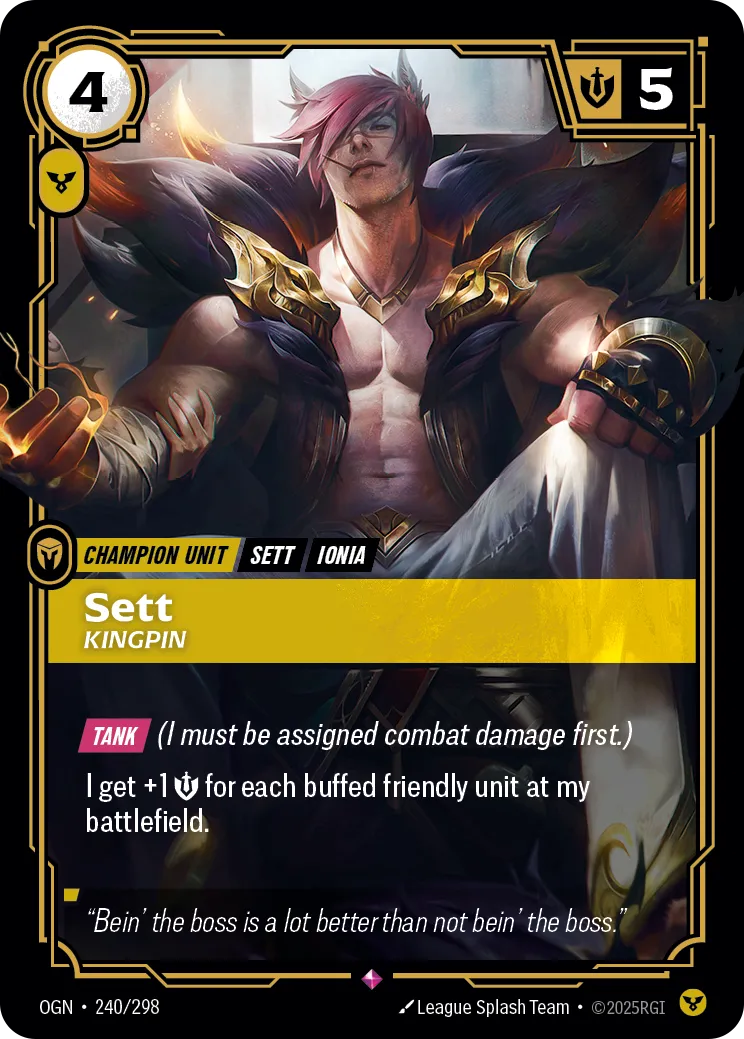
Might (💪) is a unit's strength — it decides who wins clashes on the battlefields. Power (♻) lets you recycle runes, recovering resources and keeping your tempo up. Balancing raw Might against rebuilding your economy is central to strong play.

Think of Might and recycling as two sides of tempo. Higher Might wins direct fights over battlefields, while cards that recycle runes let you bounce back faster and do more in a single turn. Experienced players trade one for the other on purpose: sometimes you give up a battlefield to refuel your resources and hit harder next turn.

See the card “Sett - Kingpin”
Rule

Battlefields and scoring

Hold battlefields to score; first to the target score wins.

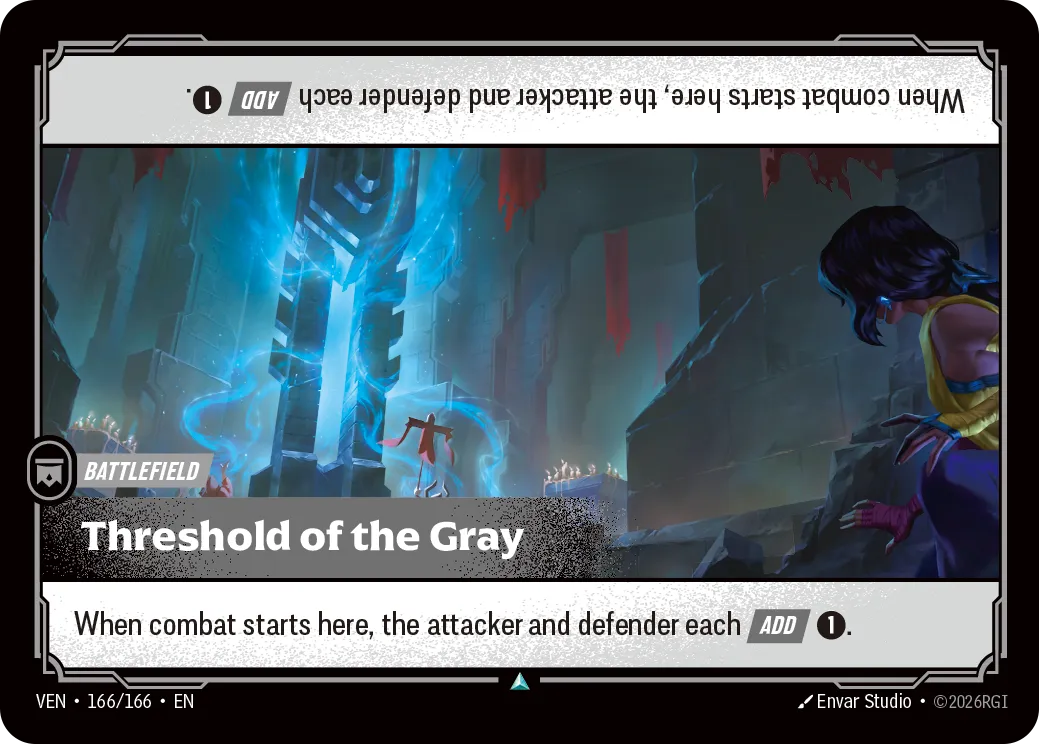
Games are fought over battlefields. You send units to contest them, and holding a battlefield at the start of your turn scores you points. The first player to reach the required score wins — so where and when you fight matters more than simply killing units.

The whole game revolves around battlefields, so positioning your units matters as much as their raw strength. What counts is control at the start of your turn, so the winner is often not the player with the biggest units but the one who puts them in the right place at the right moment. Pressuring several battlefields at once forces hard choices on your opponent, because they cannot defend everything. To see how top players handle this, browse our tournament results and meta analysis.

See the card “Threshold of the Gray”
Rule

The turn and showdowns

Refresh, score, then play and fight in showdowns.

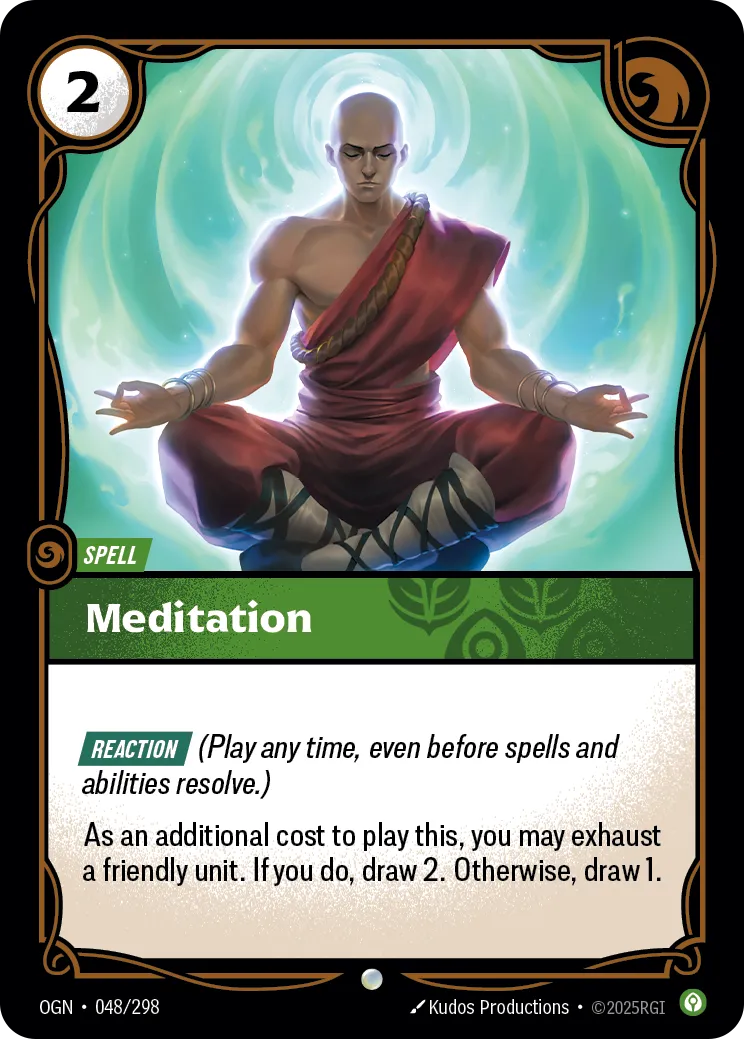
A turn runs through several phases: you refresh resources, score the battlefields you hold, then play cards and attack. When a battlefield is contested a showdown begins — the window where both players can respond with spells and abilities before damage is settled. Winning showdowns wins games.

The rhythm of a game follows the order of phases: first you refresh resources and score the battlefields you hold, and only then do you play cards and fight. That is why sequencing often matters more than the cards themselves, and a showdown is the moment when both players take turns adding units and tricks until one side backs down. Cards with Reaction and Hidden let you catch an opponent off guard in exactly this phase.

See the card “Meditation”

Mechanics and keywords

Every keyword on Riftbound cards has a precise, rules-defined meaning. Below we cover them all in turn - with the original reminder text and an example card from the catalog that carries the mechanic.

Mechanic

Action

Play on your turn or in showdowns.

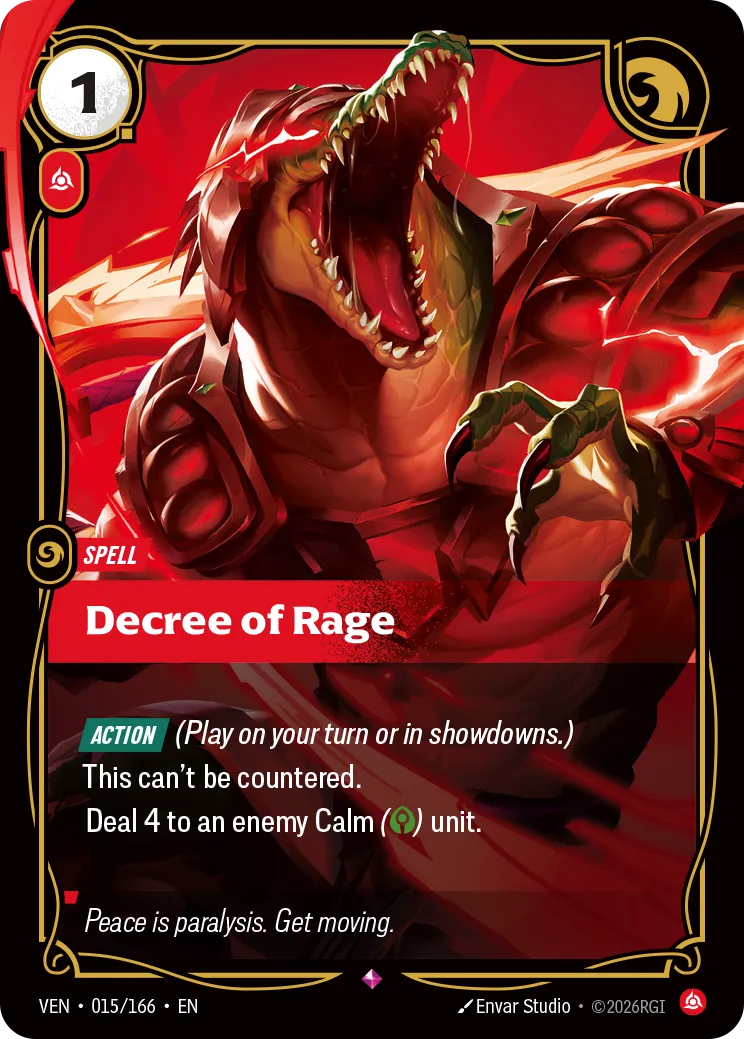
Action cards are your basic play window. You can play them on your turn or during a showdown, but not at any moment like a Reaction. It's the default timing for most spells.

In practice Action is your bread and butter: you play most spells and abilities in this window. If you want to respond faster, outside your own turn, you need cards with Reaction.

See the card “Decree of Rage”
Mechanic

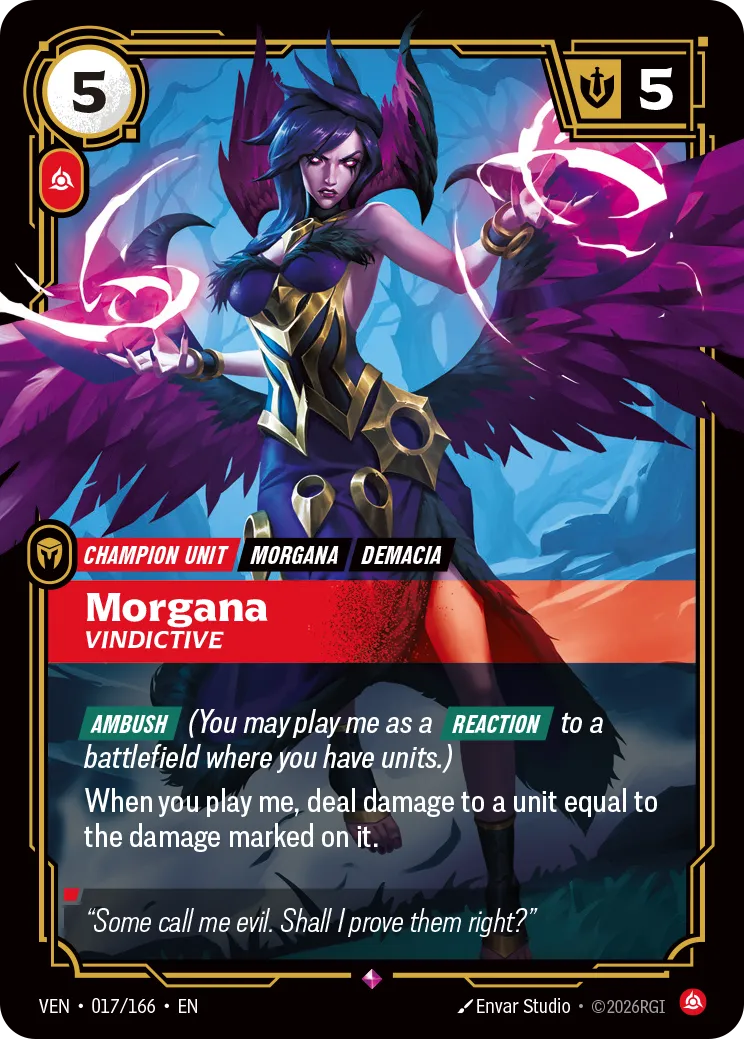
Reaction

Play any time, even before spells and abilities resolve.

Reaction is the fastest window in the game — you can play the card at any time, even before another spell or ability resolves. It's your tool for counters, combat tricks and disrupting your opponent at the critical moment.

Reaction is the heart of interactive play - holding an open card with it keeps your opponent cautious, because they never know when you will answer. It shines as a counter in the middle of a showdown or as a rescue for a unit under attack.

See the card “Morgana, Vindictive”
Mechanic

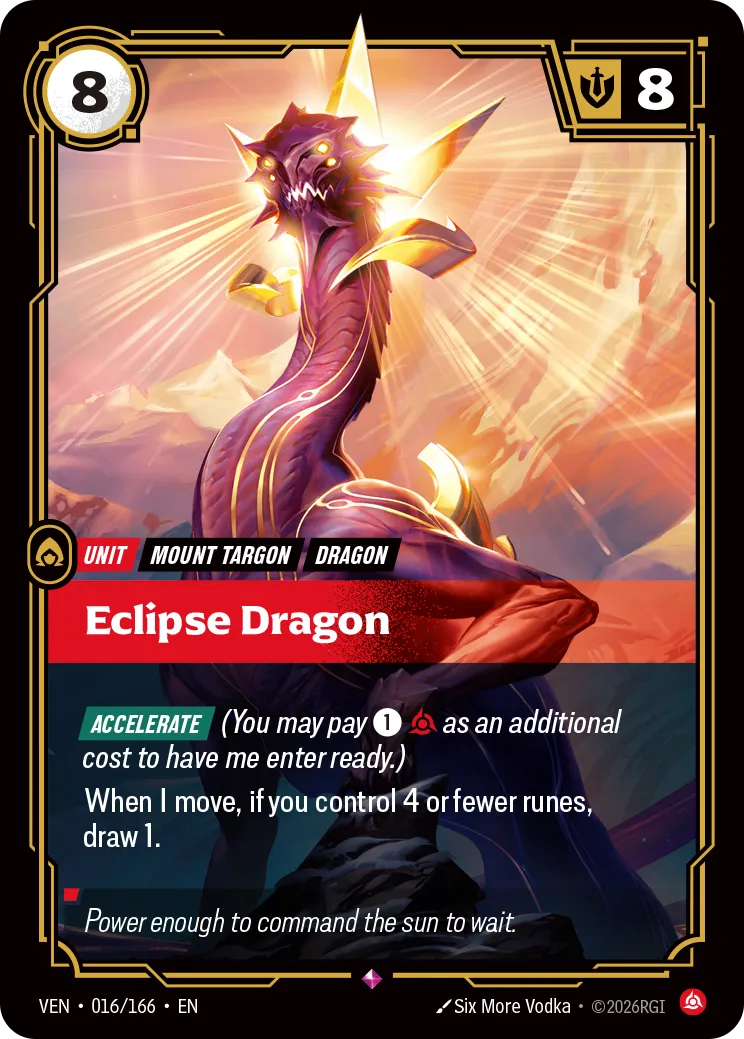
Accelerate

You may pay an additional cost to have me enter ready.

A unit with Accelerate can enter ready if you pay an additional cost. Normally freshly played units arrive exhausted and must wait — Accelerate lets them act immediately, giving you instant pressure on the battlefields.

Accelerate rewards aggressive decks: you pay extra so a unit can fight for a battlefield right away instead of waiting a turn. It is a way to surprise your opponent with a fresh attacker exactly when they least expect it.

See the card “Eclipse Dragon”
Mechanic

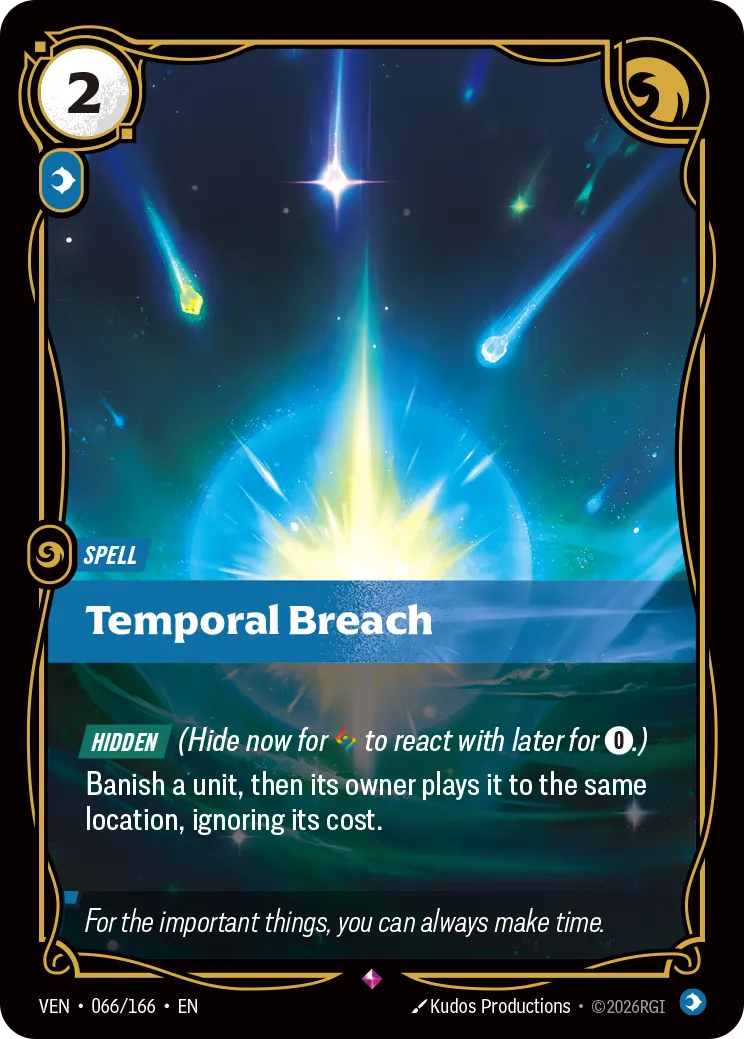
Hidden

Hide now for a rune to react with later for 0 energy.

A Hidden card can be set aside now by paying a rune, so you can later play it as a Reaction for 0 energy. It's a way to lay a trap: pay ahead of time, then spring the effect for free at the perfect moment.

Hidden is a game of bluffing: you pay a rune ahead of time and your opponent cannot see the trap you set. At the crucial moment you fire the effect for 0 energy, which frees up your resources for another play in the same turn.

See the card “Temporal Breach”
Mechanic

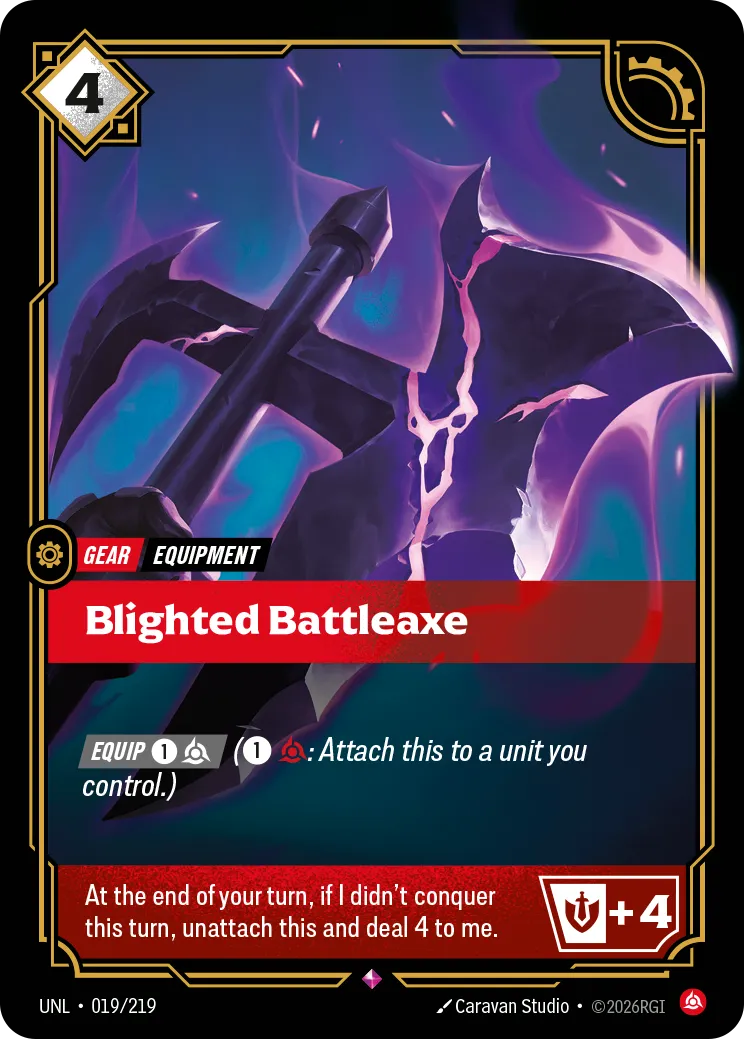
Equip

Attach this to a unit you control.

Equipment attaches to a unit you control, buffing it or granting new abilities. The item stays with the unit and turns it into a real threat on the battlefield.

Gear turns an ordinary unit into a real threat, and because it stays with that unit, it builds an edge turn after turn. Equipment decks especially value the Weaponmaster and Quick-Draw abilities, which make moving and attaching gear easier.

See the card “Blighted Battleaxe”
Mechanic

Weaponmaster

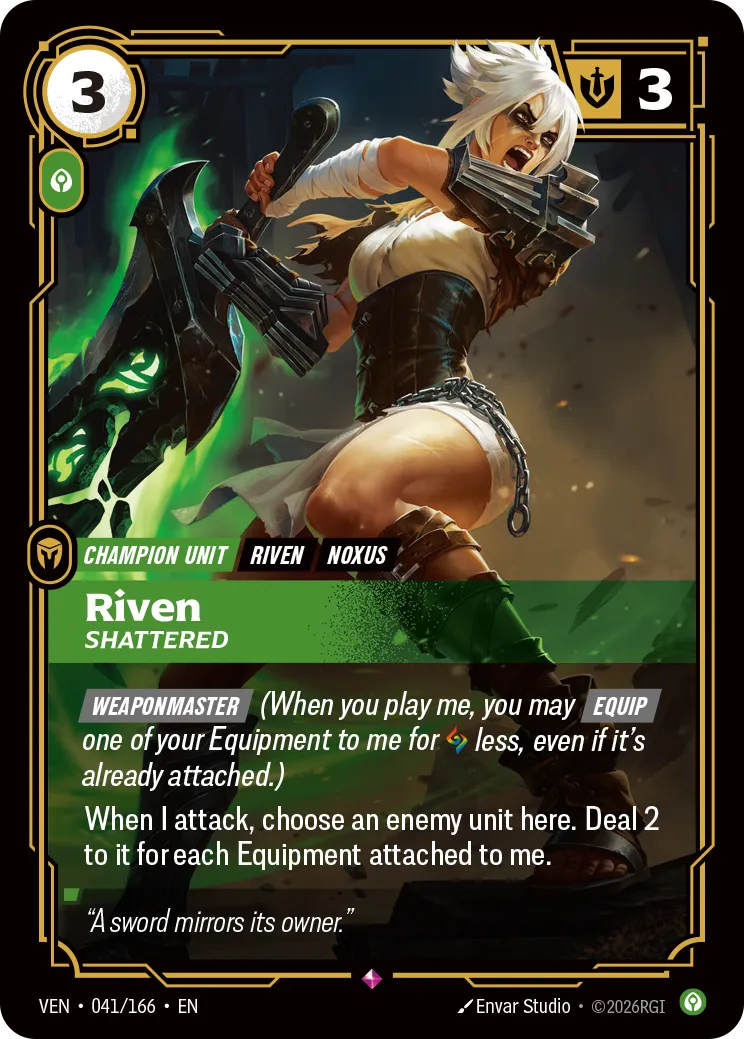
When you play me, you may Equip one of your Equipment to me for a rune less, even if it's already attached.

When you play a Weaponmaster unit, you may Equip one of your Equipment to it for less, even if that item is already attached elsewhere. It rewards decks built around shuttling a powerful weapon to wherever it's needed most.

Weaponmaster is a pillar of gear-moving decks: one strong piece of equipment can travel between units, always landing where it is needed most. The discount on attaching also makes the strategy easy on your resources.

See the card “Riven, Shattered”
Mechanic

Quick-Draw

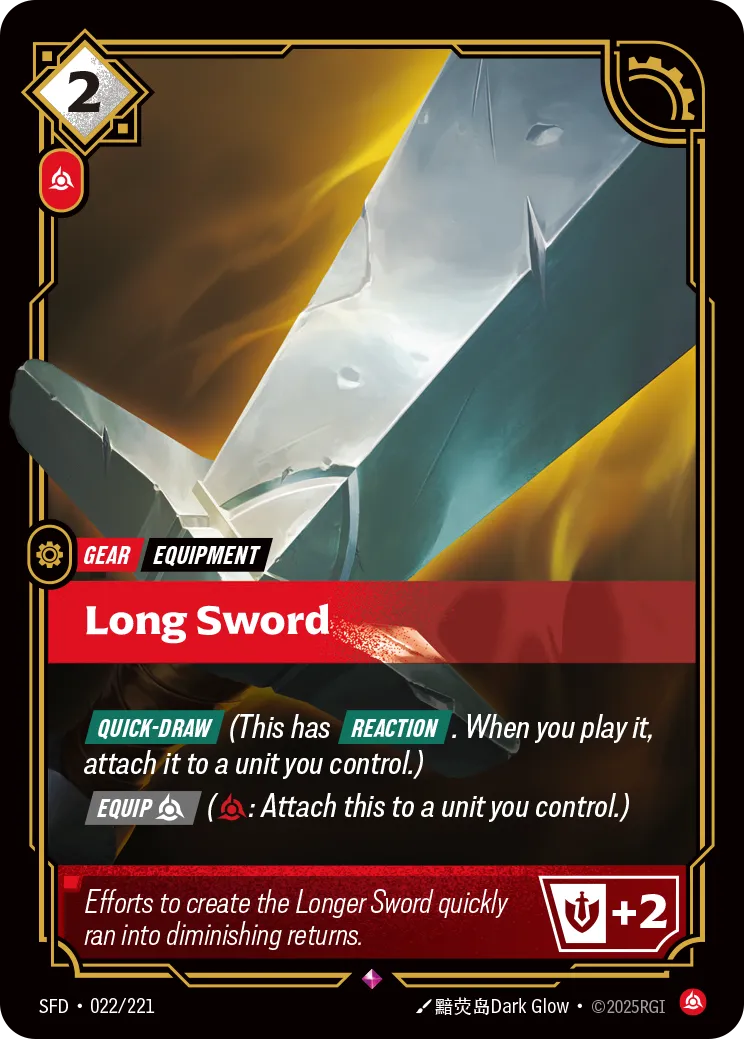
This has Reaction. When you play it, attach it to a unit you control.

A Quick-Draw item has Reaction — you can play it at any time and immediately attach it to a unit. Perfect for surprising your opponent by buffing an attacker or defender in the middle of a showdown.

Quick-Draw pairs surprise with flexibility - thanks to Reaction you attach gear mid-showdown, boosting a defender or attacker exactly when it tips the balance. It is a tool for winning fights your opponent already thought were decided.

See the card “Long Sword”
Mechanic

Deflect

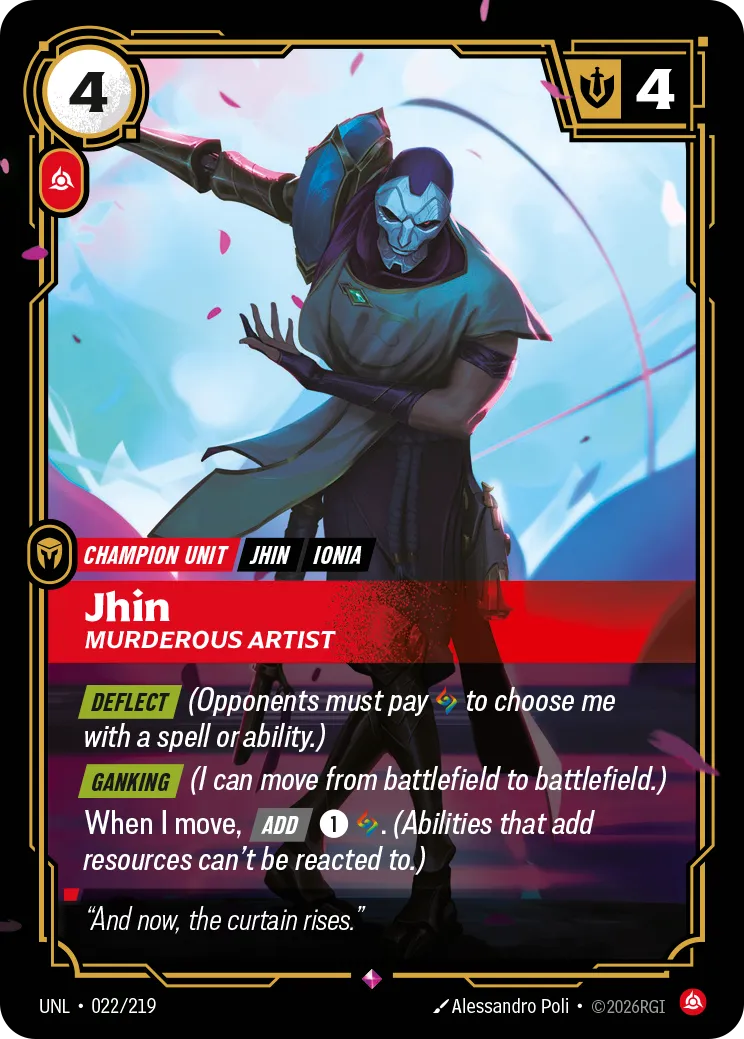
Opponents must pay a rune to choose me with a spell or ability.

A unit with Deflect is a hard target: your opponent must pay an extra rune to choose it with a spell or ability. It protects your key champions and forces your rival to waste resources.

Deflect protects your most important cards by changing the economics of removal: your opponent either pays an extra rune or gives up. That means a key champion more often survives to the moment when it truly turns the game.

See the card “Jhin - Murderous Artist”
Mechanic

Ganking

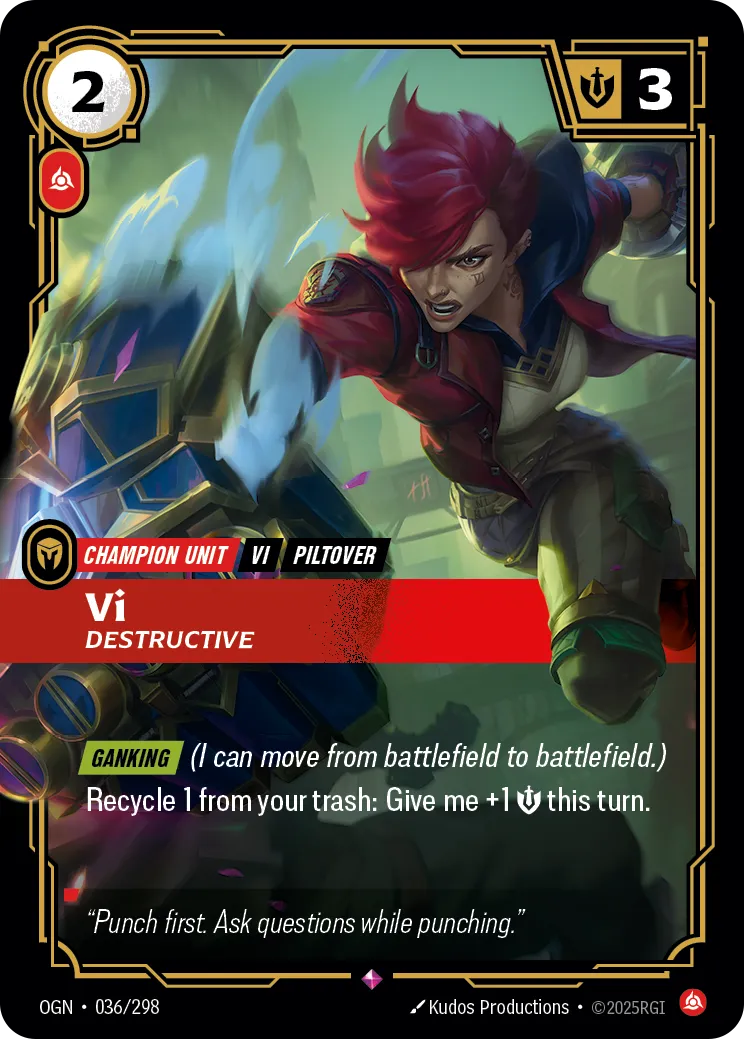
I can move from battlefield to battlefield.

A unit with Ganking can move from battlefield to battlefield. Instead of being stuck in one place, it carries its Might to wherever the fight is being decided — great for surprise attacks and rescuing contested battlefields.

Ganking gives your deck mobility - instead of leaving Might in one spot, you shift it to wherever the fight is being decided. That lets you both reinforce an attack suddenly and defend a threatened battlefield at the last moment.

See the card “Vi - Destructive”
Mechanic

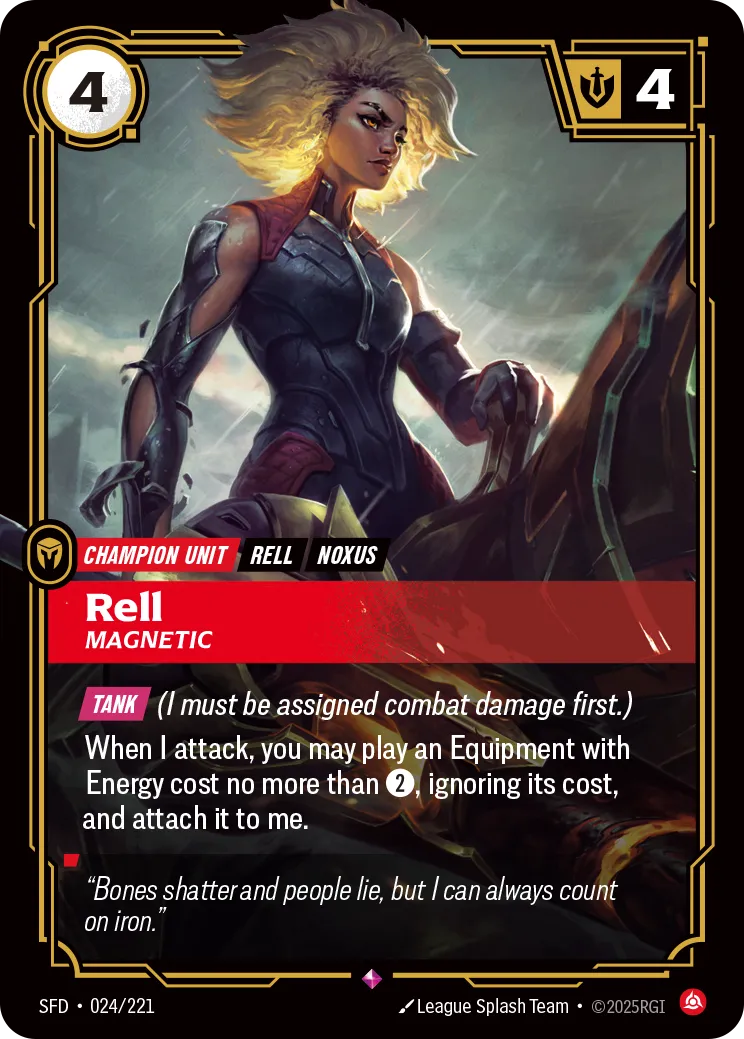
Tank

I must be assigned combat damage first.

A Tank unit must be assigned combat damage first. It shields your allies by taking the hit itself — a pillar of defensive formations that lets weaker units survive the clash.

Tank is the foundation of a defensive formation: you place it up front to take the hit so weaker units behind it survive the exchange and keep scoring the battlefield. Paired with Backline it forms a durable wall that is hard to break through.

See the card “Rell - Magnetic”
Mechanic

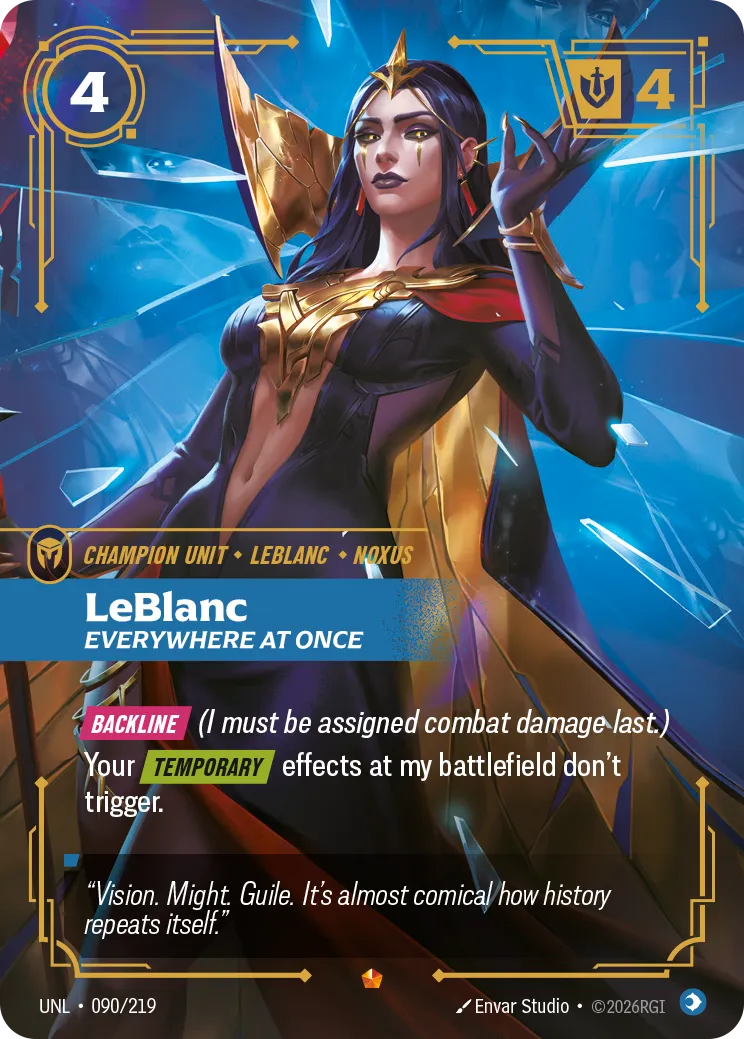
Backline

I must be assigned combat damage last.

Backline is the opposite of Tank: a unit with it must be assigned combat damage last. It hides behind others, survives the exchange and keeps contributing its Might where it counts.

Backline shields the units you actually care about - damage reaches them last, so they keep dealing Might for longer. It works best behind a Tank unit that soaks up the first blow.

See the card “LeBlanc - Everywhere At Once”
Mechanic

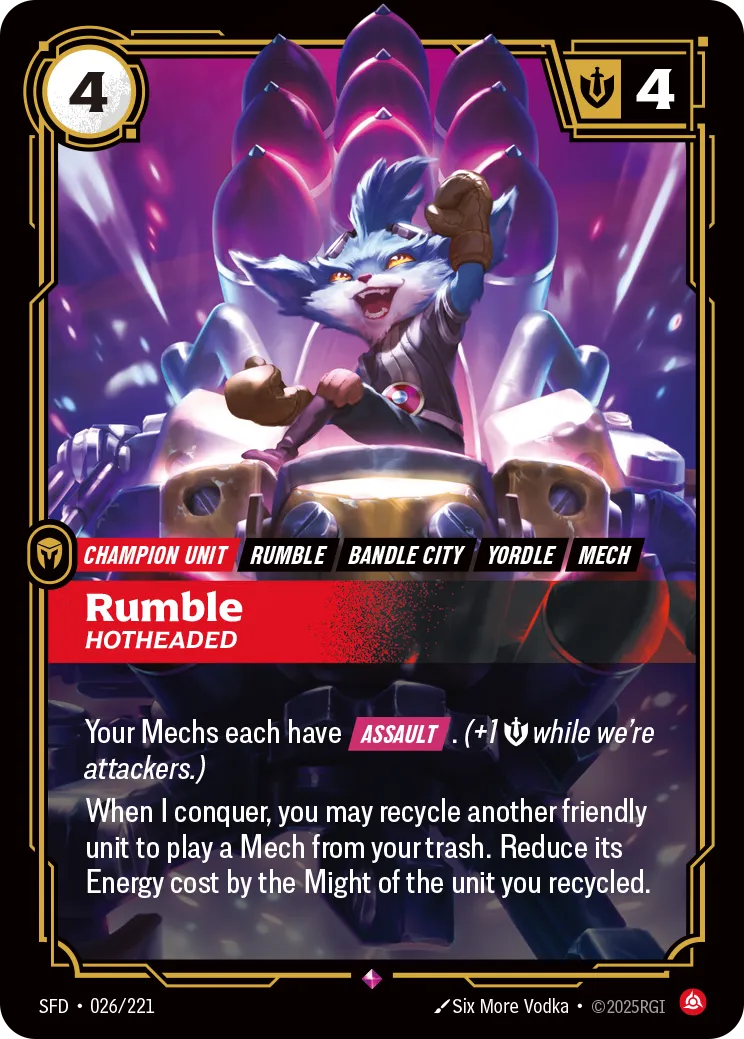
Assault

+N Might while I'm an attacker.

Assault gives a unit extra Might while it's an attacker (Assault N means +N 💪 when attacking). It rewards aggression — your units hit harder when they take the initiative.

Assault rewards offense: a unit hits harder while it is attacking, so seizing the initiative pays off. In a pressure deck a few such units quickly break an opponent's defense.

See the card “Rumble - Hotheaded”
Mechanic

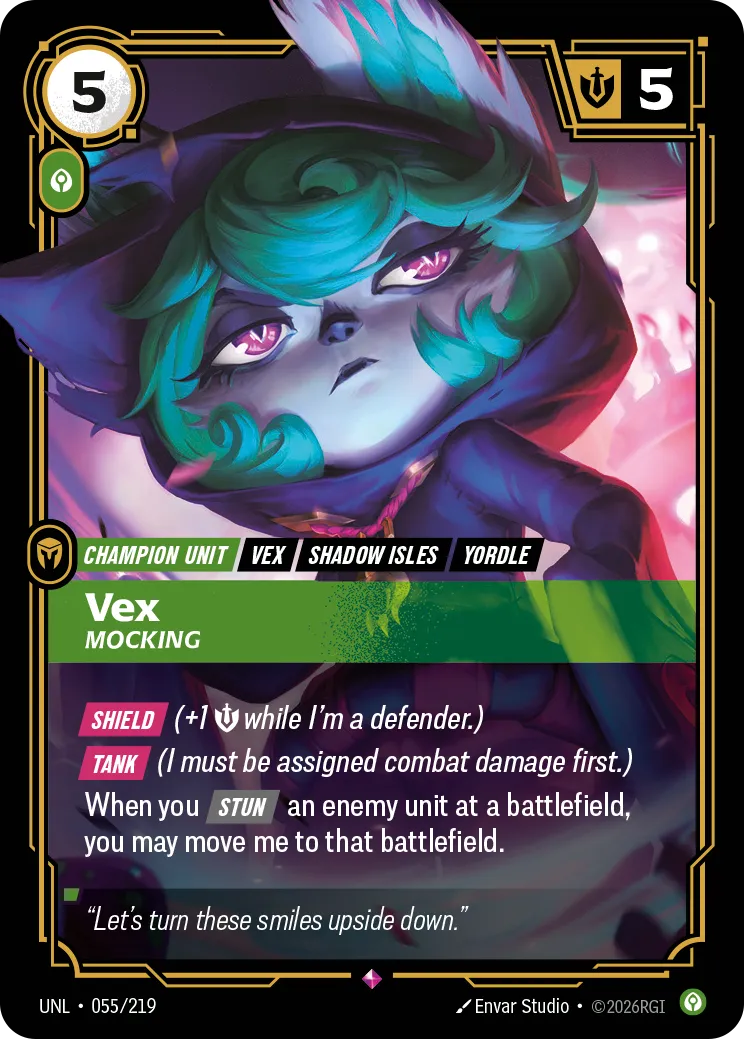
Shield

+N Might while I'm a defender.

Shield mirrors Assault: extra Might while the unit is a defender (Shield N means +N 💪 when defending). It turns your units into sturdy guardians that hold their battlefields.

Shield is Assault's defensive twin - a unit gains Might while defending, so it holds battlefields even against stronger attackers. It is the backbone of decks that win through control rather than fast aggression.

See the card “Vex - Mocking”
Mechanic

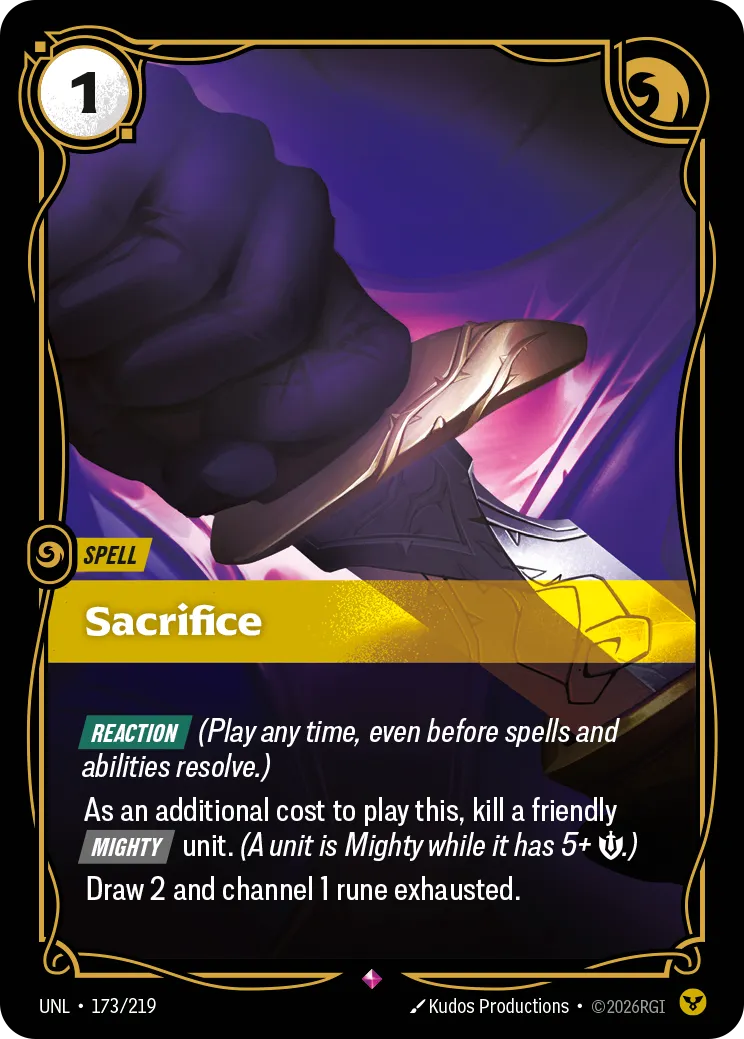
Mighty

A unit is Mighty while it has 5+ Might.

A unit is Mighty while it has 5 or more Might. Many cards unlock extra effects around Mighty units, so pushing Might past that threshold is a rewarded strategy.

Mighty is a threshold that unlocks extra effects: once a unit reaches 5 Might, many cards start working harder. That is why cards that raise Might carry double value - they both win fights and trigger Mighty bonuses.

See the card “Sacrifice”
Mechanic

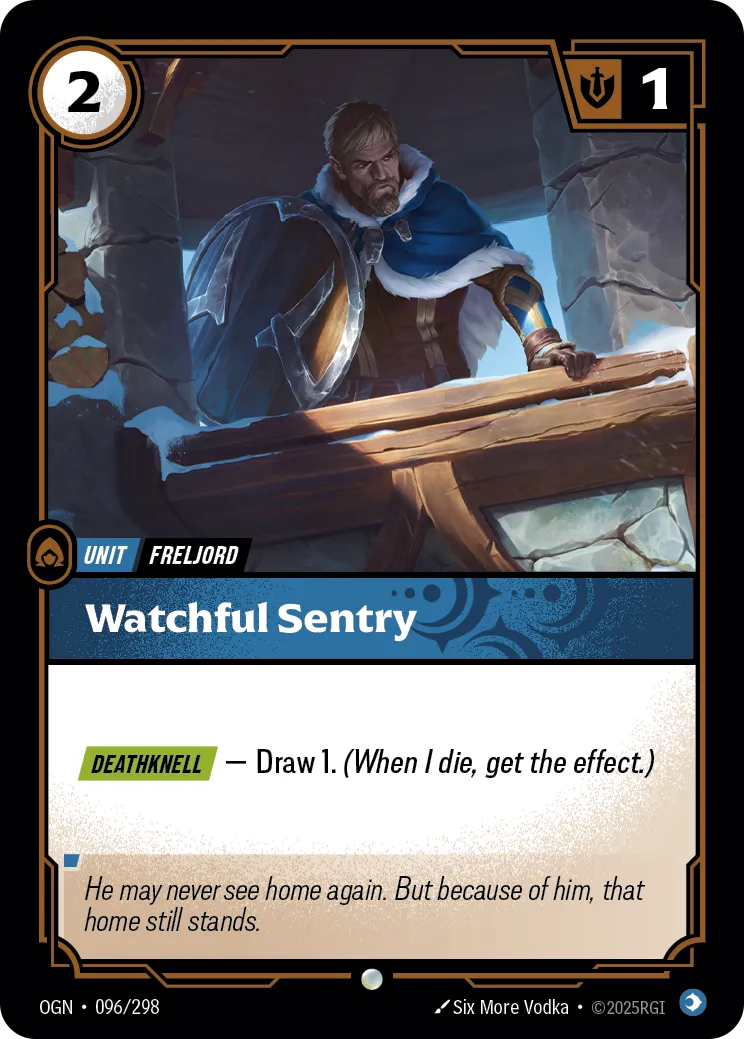
Deathknell

When I die, get the effect.

Deathknell triggers when the unit dies — then you get its printed effect. Losing such a unit isn't a setback but part of the plan: you draw cards, refuel runes or land another blow.

Deathknell turns your unit's death to your advantage, so your opponent is never sure it is worth killing. Decks with many such units are hard to grind down, because every trade converts into more value.

See the card “Watchful Sentry”
Mechanic

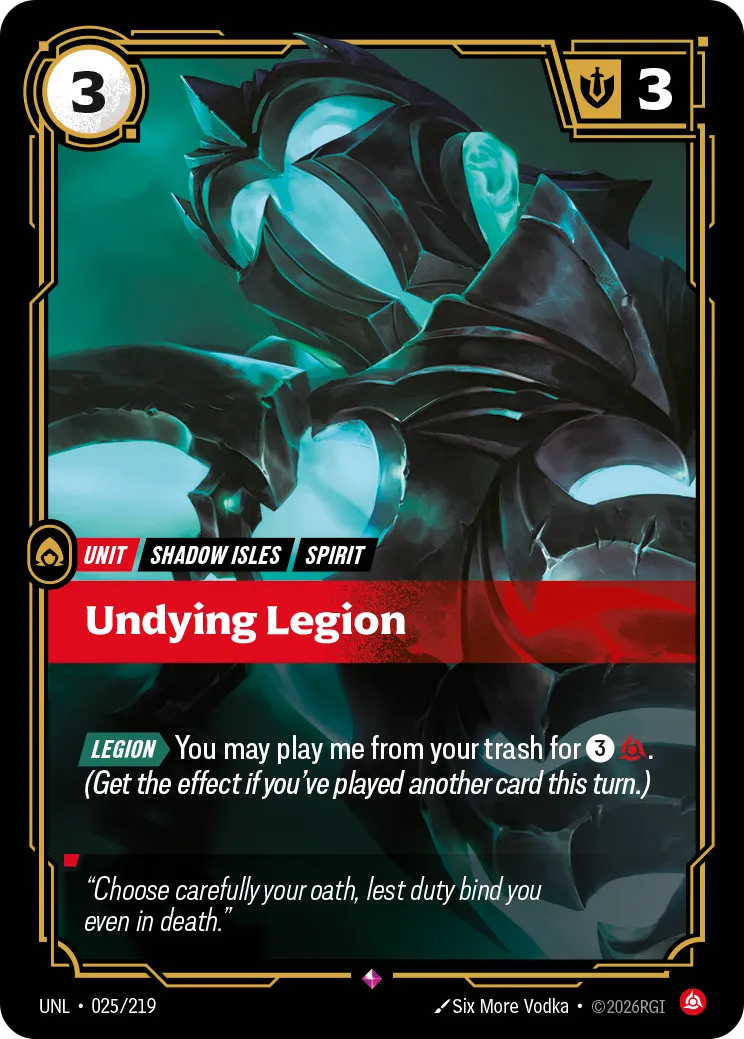
Legion

Get the effect if you've played another card this turn.

A Legion effect switches on if you've already played another card this turn. It's a reward for building momentum: the more you do, the stronger your following plays become.

Legion rewards active, fast-moving turns - the more cards you play, the stronger the next ones become. It pays to sequence your plays so you meet the condition first and then unleash your strongest one.

See the card “Undying Legion”
Mechanic

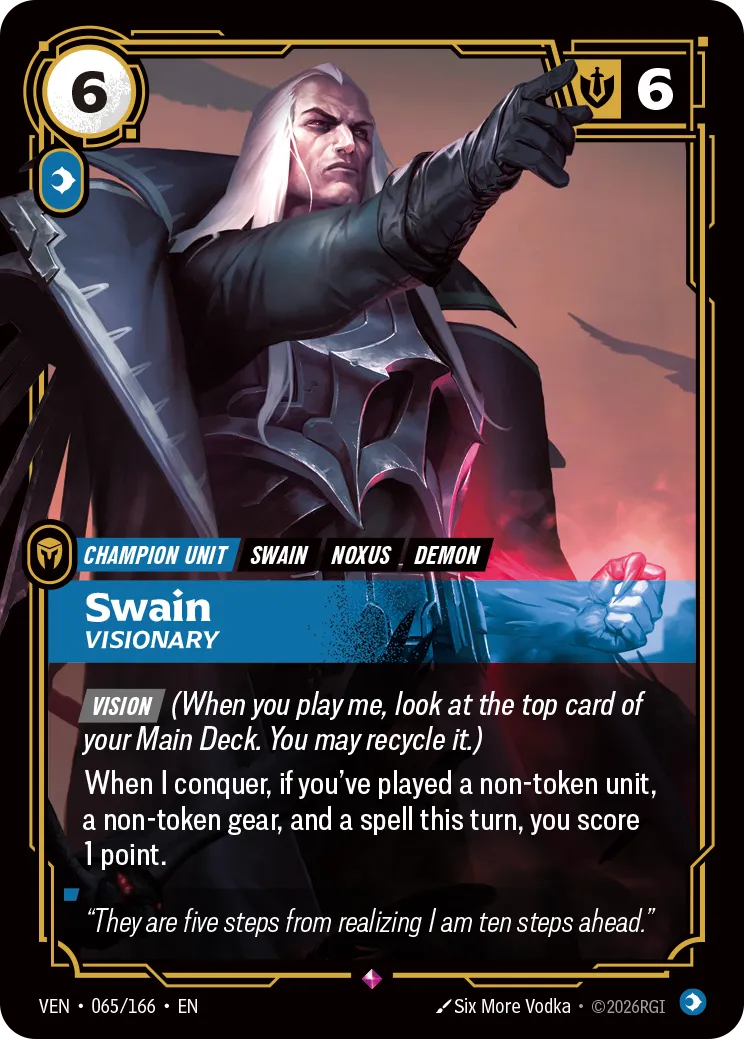
Vision

When you play me, look at the top card of your Main Deck. You may recycle it.

When you play a Vision card, you look at the top card of your Main Deck and may recycle it. It's light card selection: it smooths your draws and lets you get rid of what you don't need right now.

Vision smooths your draws: you peek at the top of your deck and recycle what you do not need, moving closer to the cards you want. It is a subtle but steady edge that adds up to better hands over time.

See the card “Swain, Visionary”
Mechanic

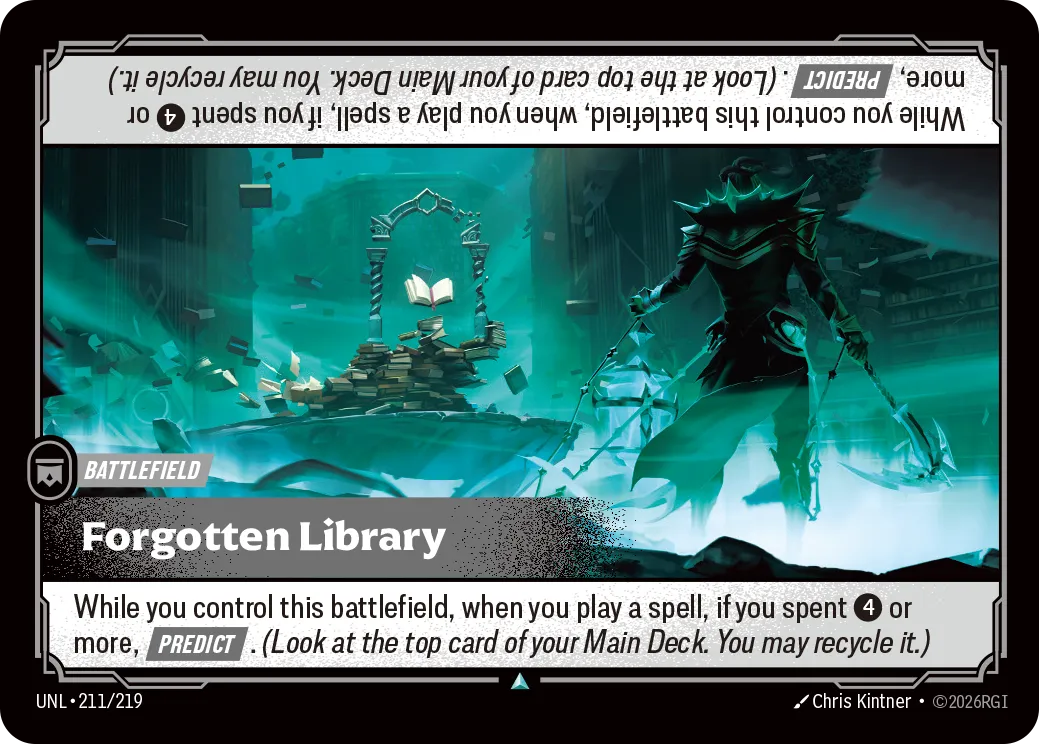
Predict

Look at the top card of your Main Deck. You may recycle it.

Predict lets you look at the top card of your Main Deck and optionally recycle it. Like Vision, it gives you control over your next draw — you set up your deck before you even draw.

Predict, like Vision, gives you control over your next draw, but it often appears on cheaper effects and across several cards at once. By arranging the top of your deck, you plan your next turn before you even draw.

See the card “Forgotten Library”
Mechanic

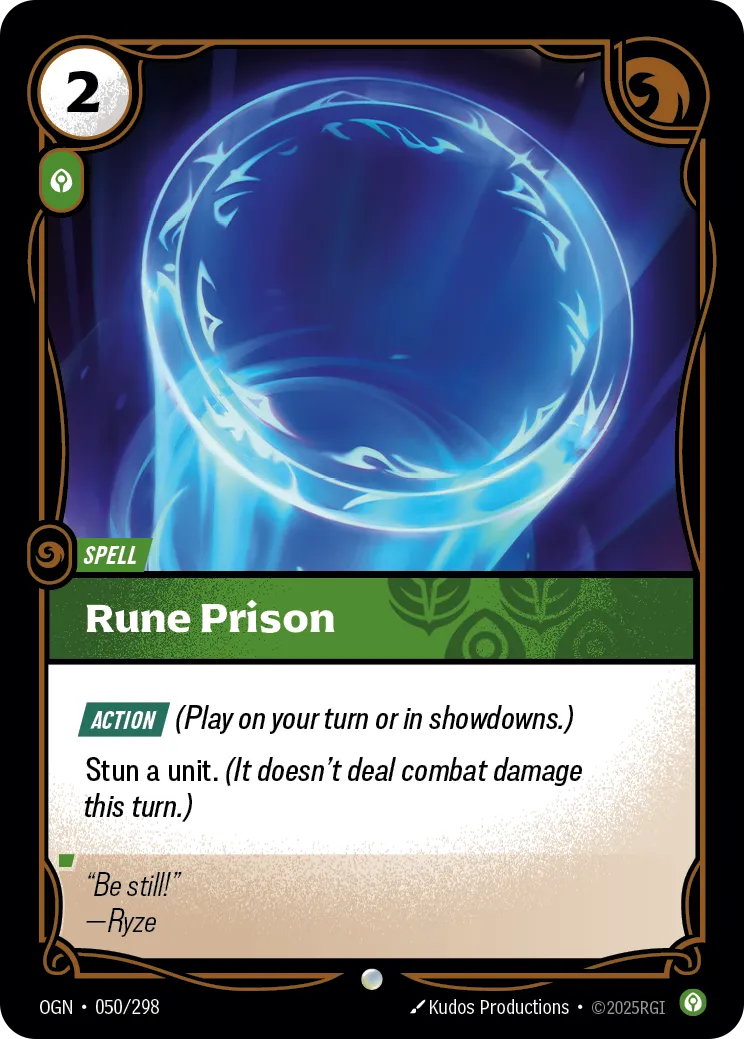
Stun

It doesn't deal combat damage this turn.

A stunned unit deals no combat damage this turn. It's a way to neutralize a dangerous attacker or defender without killing it — you just make sure it can't strike when it matters most.

Stun is soft removal: you do not kill a dangerous unit, you just take away its blow at the key moment. It pairs well with battlefield fights, because a stunned attacker will not break your defense this turn.

See the card “Rune Prison”
Mechanic

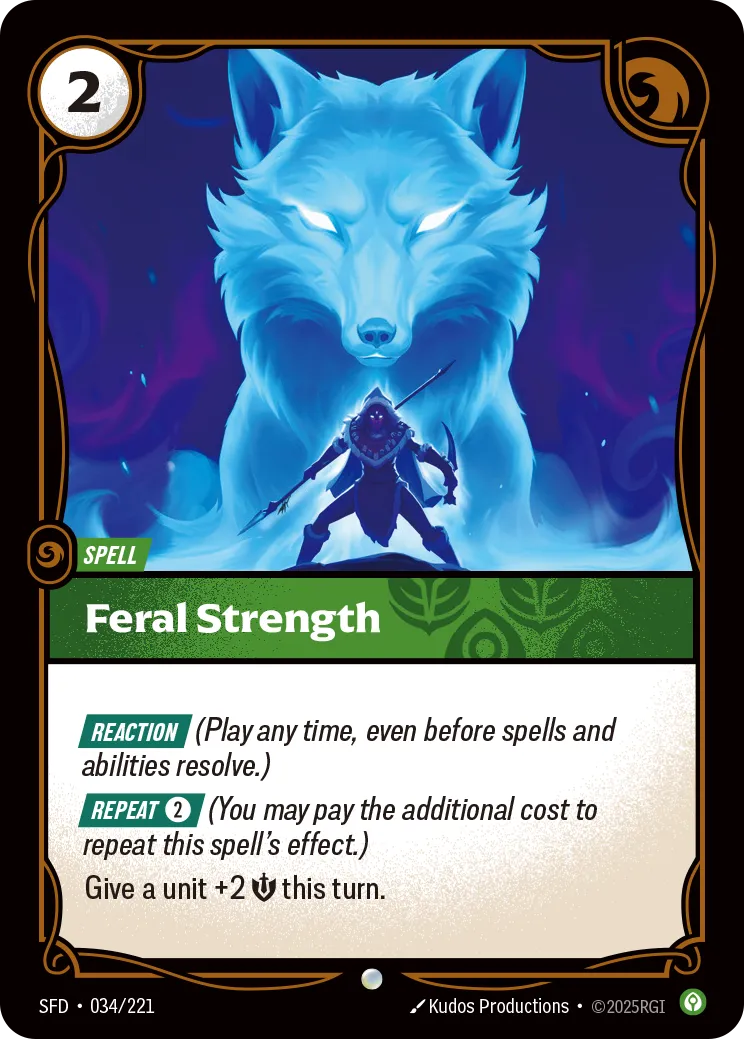
Repeat

You may pay the additional cost to repeat this spell's effect.

Repeat lets you pay an additional cost to repeat the spell's effect. A single card can go off twice — great when you have resources to spare and want to convert them into extra value.

Repeat converts spare resources into double value - one card acts like two if you can afford the extra cost. It rewards decks that can generate plenty of runes and energy in a single turn.

See the card “Feral Strength”
Mechanic

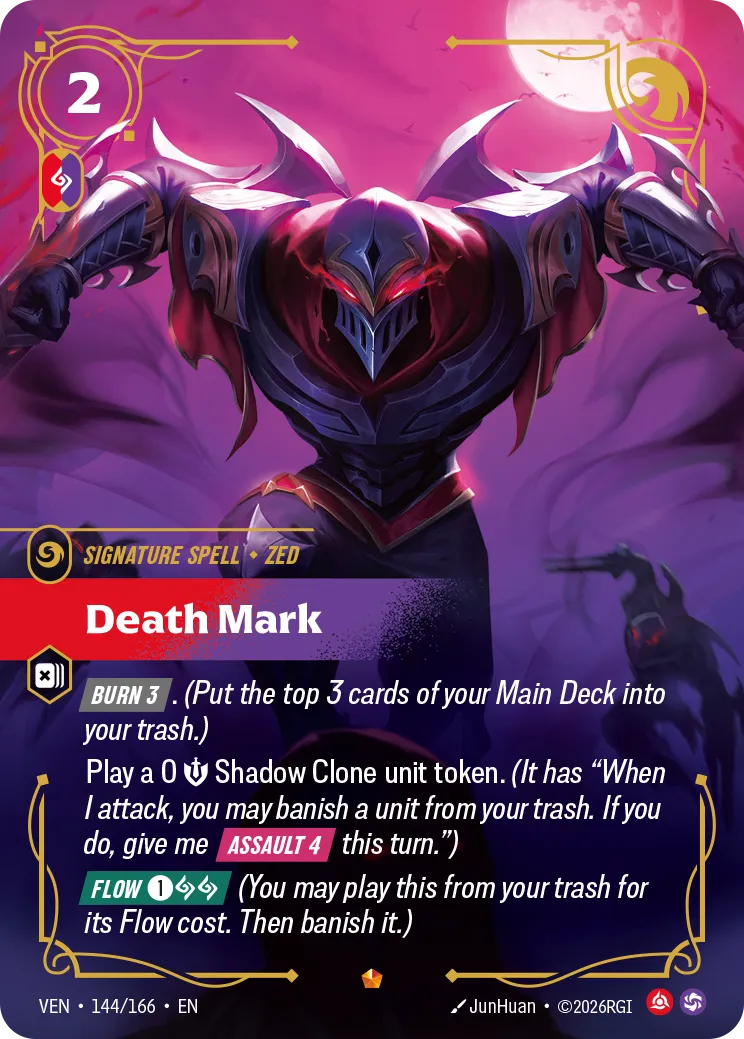
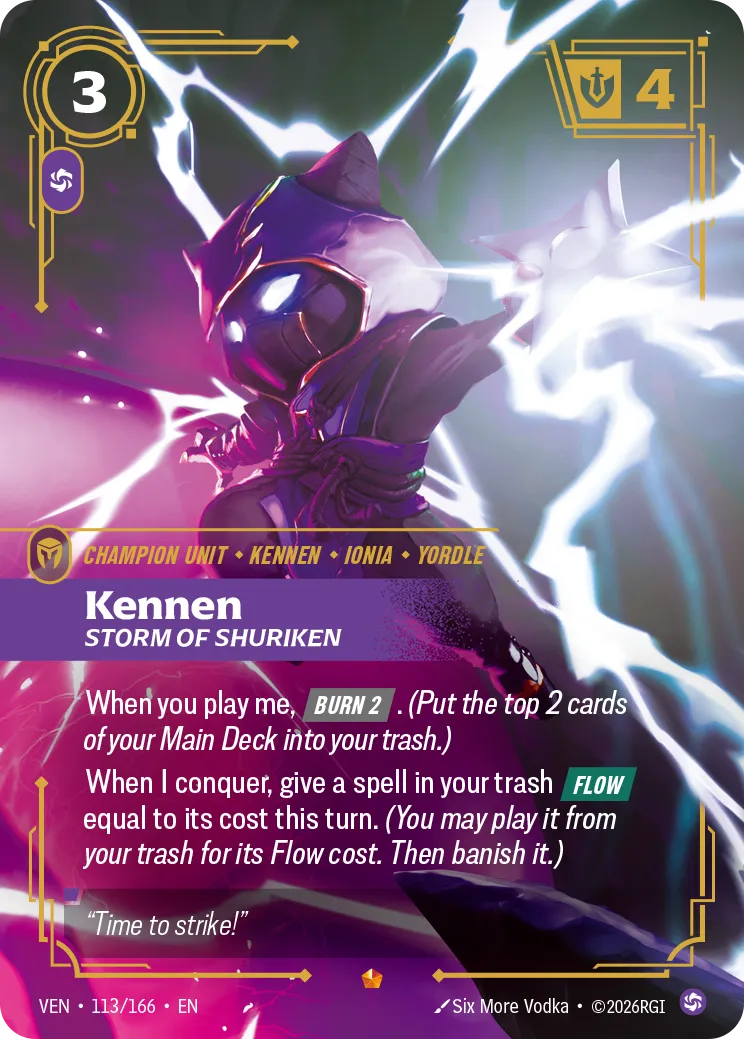
Burn

Put the top N cards of your Main Deck into your trash.

Burn N puts the top N cards of your Main Deck into your trash. On its own it sounds risky, but it fuels trash-based strategies like Flow, turning a 'loss' into fuel.

Burn looks like a loss on its own, but it is fuel for trash-based strategies. By filling the trash with the right cards, you set up Flow, which lets you get them back later.

See the card “Death Mark”
Mechanic

Flow

You may play this from your trash for its Flow cost.

Flow lets you play a card straight from your trash by paying its Flow cost. Cards you burned earlier come back into play — your trash becomes a second hand full of options.

Flow turns the trash into a second hand: cards you burned earlier can be played again for their Flow cost. This pair of mechanics drives decks that squeeze value out of seemingly discarded cards.

See the card “Kennen, Storm of Shuriken”
Mechanic

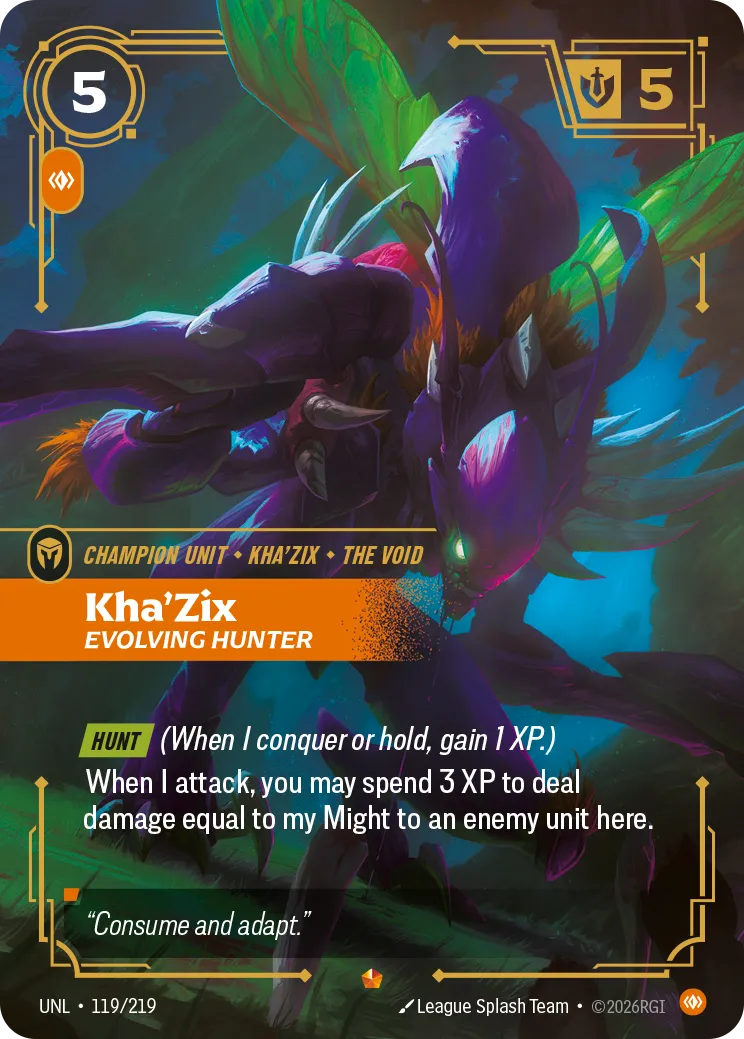
Hunt

When I conquer or hold, gain 1 XP.

A Hunt unit gains XP when it conquers or holds a battlefield. Over time it grows stronger and levels up — rewarding active, aggressive play for the battlefields.

Hunt rewards active battlefield play - the more often you conquer and hold, the faster the unit grows and unlocks new levels. It is a mechanic that favors initiative and steady pressure.

See the card “Kha'Zix - Evolving Hunter”
Mechanic

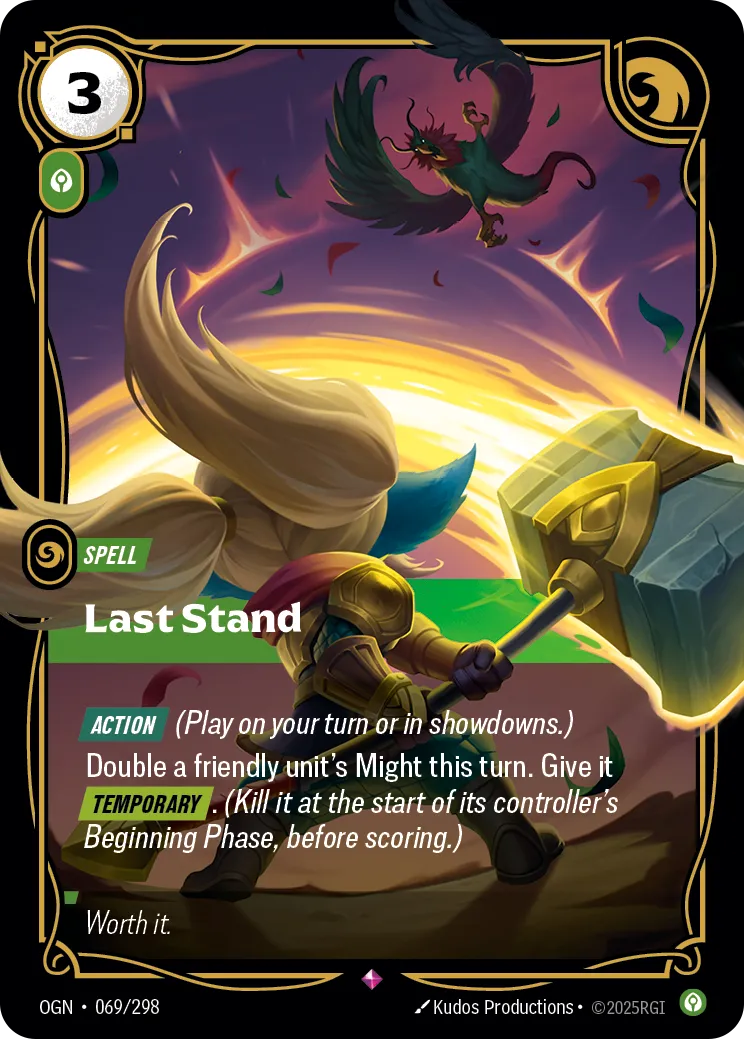
Temporary

Kill me at the start of your Beginning Phase, before scoring.

A Temporary unit is killed at the start of your Beginning Phase, before scoring. It's a powerful but fleeting resource — you get one turn to make the most of it before it disappears.

Temporary is a powerful but fleeting resource: you have just one turn before the unit vanishes, so you must plan how to squeeze the most out of it. It combines best with effects that pay off immediately anyway, such as Deathknell.

See the card “Last Stand”

Start playing Riftbound

Now that you know the rules and the key mechanics, it is time to put them into practice. Browse the full card catalog, see which decks are winning current tournaments, and build your own list in the deck builder.

Reminder texts are quoted from Riftbound cards (Riot Games). RiftWorld.pl is an independent fan portal.